The rise of vertical gardens in sustainable design
Key takeaways
- Living green walls help architects meet sustainable design goals by supporting LEED®, WELL™, and Fitwel® initiatives.
- Green walls can be customized for indoor and outdoor projects, with the main types of green wall systems being panel and tray systems.
- Spaces with limited sunlight and temperature fluctuations may be challenging for living green walls and more suitable for alternatives like replica green walls or preserved moss walls.
- Ambius provides end-to-end green wall expertise, from design support and premium plant sourcing to installation and ongoing horticultural care.
Jump to section
- How can green walls help with sustainable design goals?
- What types of green walls are there and where can they be installed?
- How can green walls be customized?
- When are living green walls not the best sustainable design option?
How can green walls help with sustainable design goals?
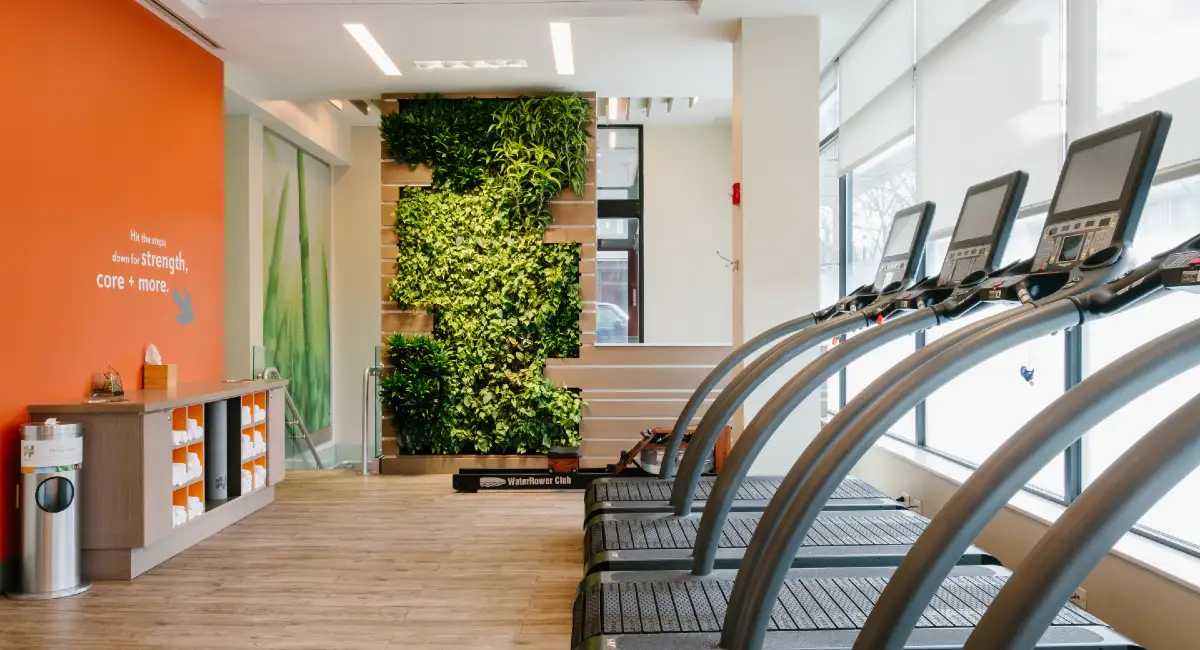
Living green walls are more than just a nice-to-have; they’re also influential for projects aiming to meet LEED®, WELL™, and Fitwel® certification standards. There are a range of green walls benefits that support both sustainability and occupant well-being, including:
- Thermal insulation, which helps regulate indoor temperature and reduce energy use¹
- Air purification, as live plants filter toxins and improve indoor air quality²
- The psychological benefit of biophilic design, which includes improved mood, creativity, and productivity among building occupants³
Understanding the fundamentals of healthy building certifications can be overwhelming. That’s why Ambius created the Basics of Healthy Building Certifications series—three concise guides introducing the core principles of LEED®, WELL™, and Fitwel®.
What types of green walls are there and where can they be installed?
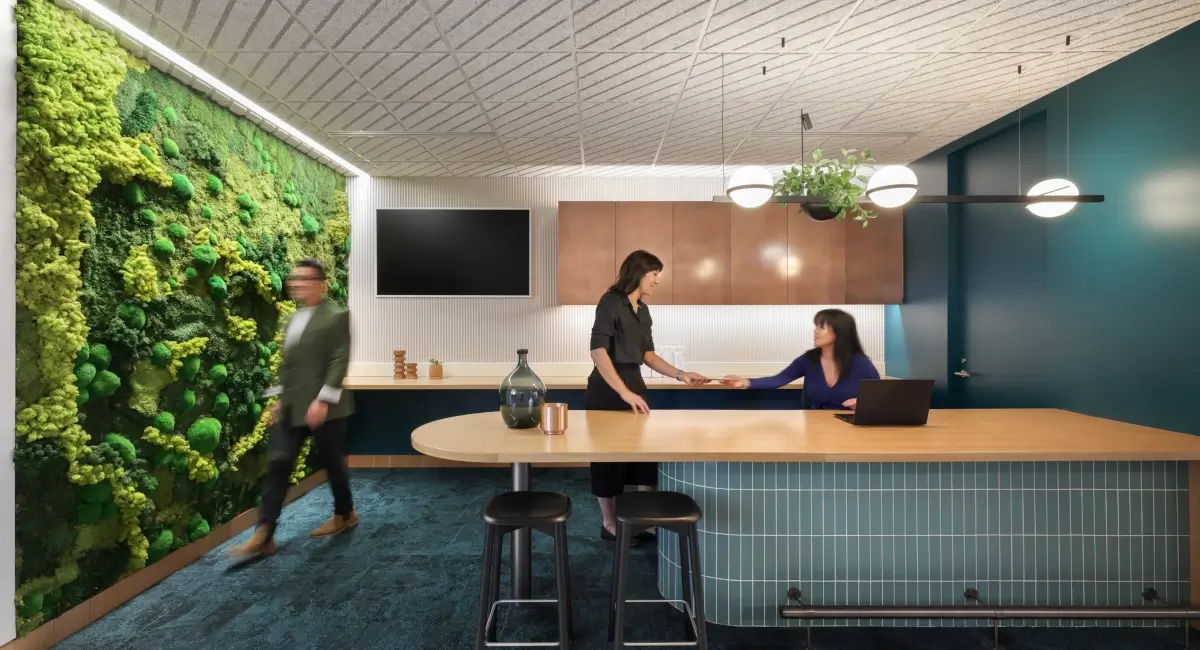
Living green walls can be installed indoors or outdoors and are highly adaptable with different systems that can be tailored to the needs of nearly any project. Exterior green walls enhance building facades while aiding in cooling by absorbing sunlight. Indoors, they make bold design statements while helping to dampen noise and add a sense of calm to busy spaces.
Ambius can help architects select the most appropriate type of green wall system based on the budget, goals, and technical considerations for a project:
- Panel systems
- Often used for exteriors
- Feature pre-grown plants anchored into rigid panels
- Typically use drip lines installed over each panel row for targeted watering
- Ideal for high-wind environments and unpredictable weather by offering more long-term durability
- Tray systems
- Commonly used indoors
- Allow potted plants to be inserted at a 45-degree angle
- Use cascading irrigation, where water flows top-down through a horizontal drip line network
- Easier to maintain and allow for individual plant replacement
Ambius also helps coordinate the placement of irrigation equipment, which often involves locating control units near utility rooms and ensuring proper access for future maintenance. Other environmental factors, like temperature sensitivity and airflow, are reviewed to avoid placing green walls near exterior doors or HVAC vents that could stress plants.
How can green walls be customized?
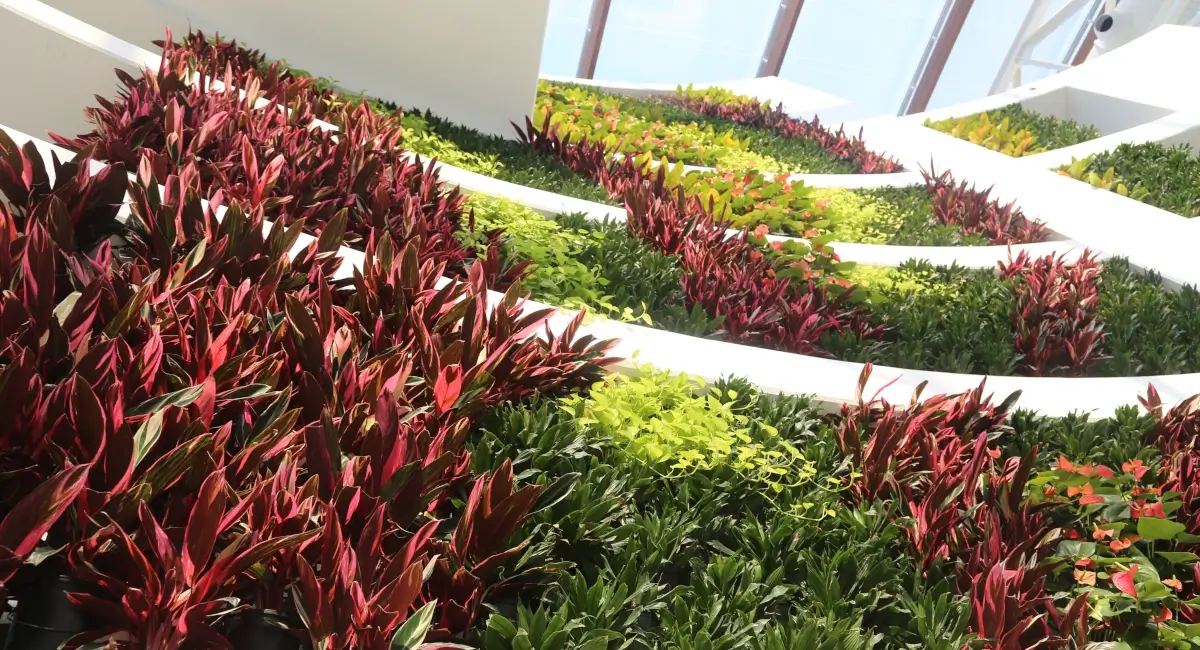
Living green walls should reflect the unique brand identity and goals for a space, and can be customized by system set-up, plant selection, color, size, and maintenance needs. Our award-winning designers are well-versed in curating species that offer lasting color, thrive in most indoor environments, and deliver a wow factor that people are sure to remember.
What selection of plants for green walls does Ambius have?
By operating two in-house plant finishing centers and maintaining close relationships with top suppliers, we’re able to offer access to premium and rare plant species that architects often seek. Each plant is carefully cultivated and finished to maturity, helping ensure:
- Greater consistency in appearance for a refined, professional finish
- Unique, eye-catching selections that set your design apart
- Stronger plant health and fewer replacements over time
Additionally, Ambius is proud to offer ongoing maintenance services to ensure your green walls remain healthy, vibrant, and visually striking—day in and day out. From routine care to seasonal adjustments, our horticultural specialists can make sure your plants are always ready for first impressions.
When are living green walls not the best sustainable design option?
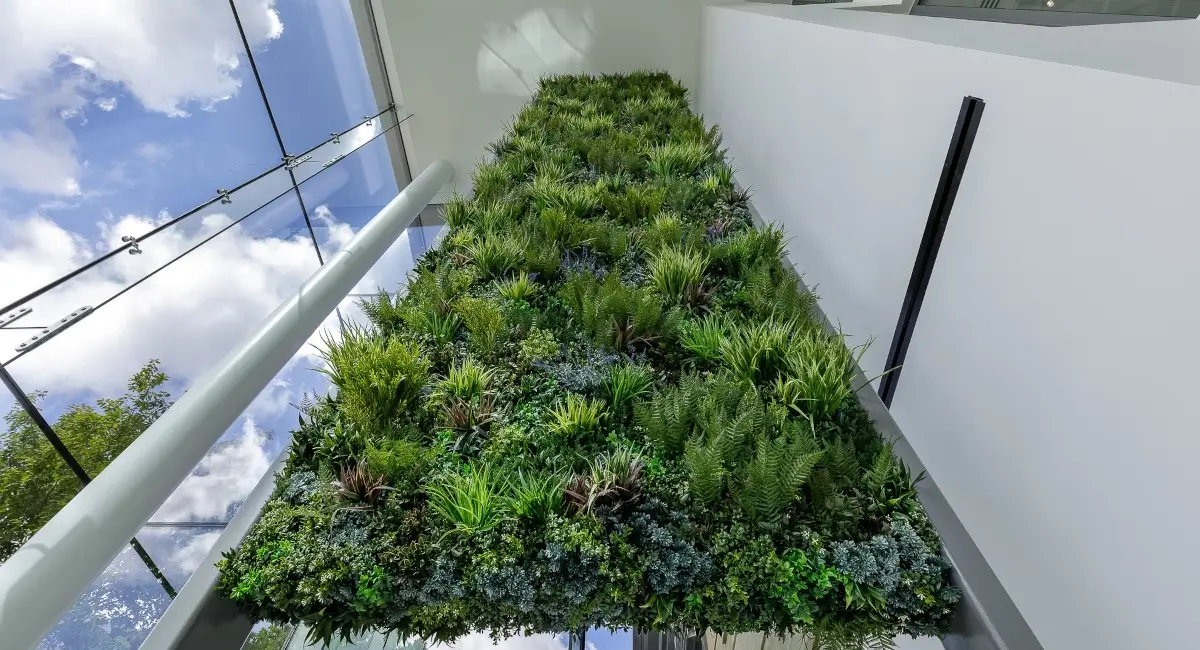
Not every space can support live plant installations and factors like limited sunlight, temperature fluctuations, or lack of irrigation infrastructure can make living green walls difficult to install and maintain. In such cases, Ambius offers high-quality artificial green walls and preserved moss walls as alternative solutions. These provide the lush, verdant look and psychological benefits of natural foliage without the requirements of live plant care.
—
Vertical gardens and living green walls offer architects a powerful way to create distinct, high-impact spaces that align with modern building standards. Let Ambius’ team of Elite Designers and Staff Architects take care of the technical and horticultural aspects so you can focus on bringing the big picture to life. Contact us today
Sources:
- ScienceDirect: Cooling, CO2 reduction, and energy-saving benefits of a green-living wall in an actual workplace
- National Library of Medicine: Mitigation of common indoor air pollutants using plant-based methods
- Horticultural Research Institute: Emotional and Mental Health Benefits of Plants